
Explore the History of the Further
The Art of Insidious: Exploring the Filmography, Visual Style and Nightmarish World of the Franchise
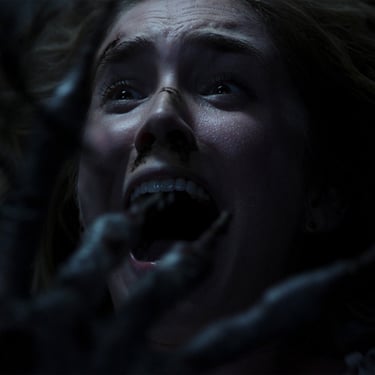
Few modern horror franchises have created a supernatural world as visually recognizable as Insidious. Beginning with James Wan's 2010 film, the series developed an artistic identity built around shadows, silence, unsettling architecture, practical creature design, distorted spaces and one of horror's most memorable visual concepts: The Further.
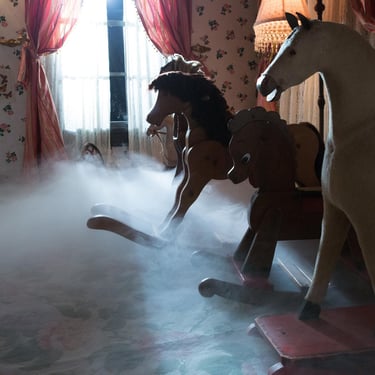
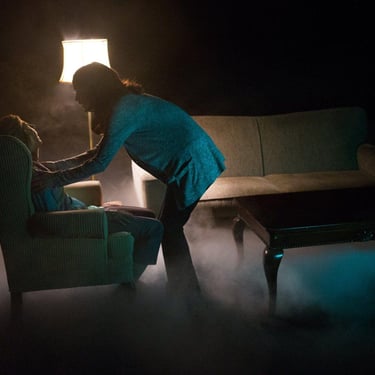
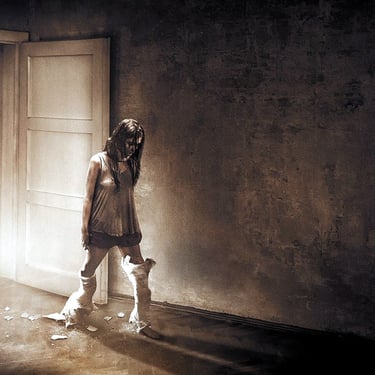
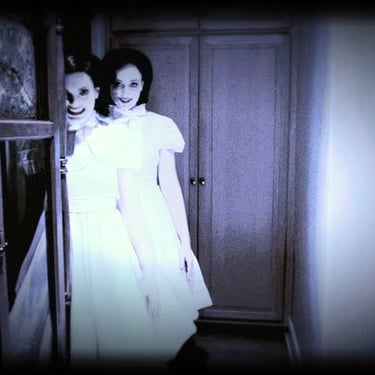
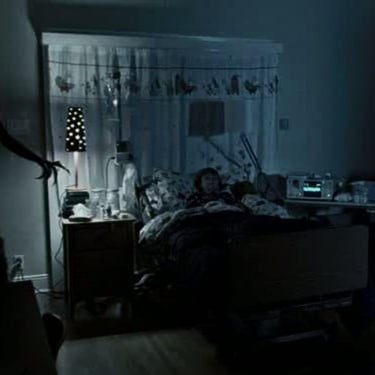
What makes Insidious particularly fascinating from an artistic perspective is that the movies have never depended entirely on gore. Instead, the filmmakers repeatedly turn ordinary places—homes, bedrooms, hallways, classrooms and hospitals—into threatening environments. The horror often comes from what might be standing just outside the frame.
The franchise began as a collaboration between director James Wan and writer Leigh Whannell, the same creative partnership that had previously produced Saw. But where Saw was associated with elaborate traps and graphic violence, Insidious deliberately moved toward supernatural atmosphere and psychological fear. Wan wanted to demonstrate that he could create frightening cinema without relying on the extreme violence associated with his earlier work.
The result was a movie that helped establish a new visual vocabulary for supernatural horror.
The Original Insidious: Darkness as a Character
The first Insidious is arguably the artistic foundation for everything that followed.
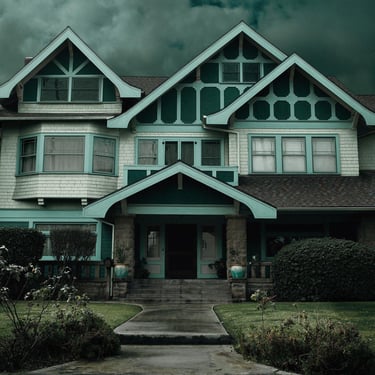
Cinematographer John R. Leonetti helped create a world that feels recognizable but slightly wrong. The Lambert family's house is not presented as a gothic mansion or an obviously haunted location. It is an ordinary suburban home.
That decision is important.
The audience isn't allowed to dismiss the setting as somewhere that could never exist. Instead, the filmmakers make familiar domestic spaces frightening.
Bedrooms become dangerous.
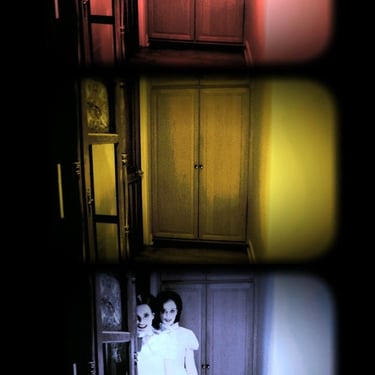
Hallways become threatening.
Doorways become places where something might suddenly appear.
And then there is The Further.
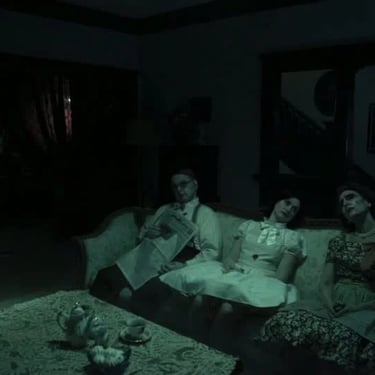
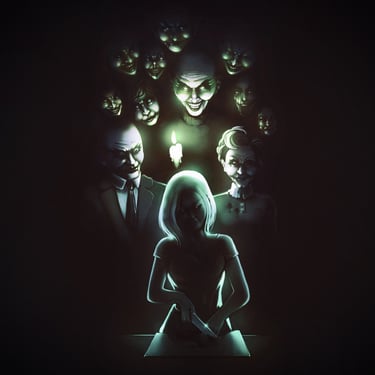
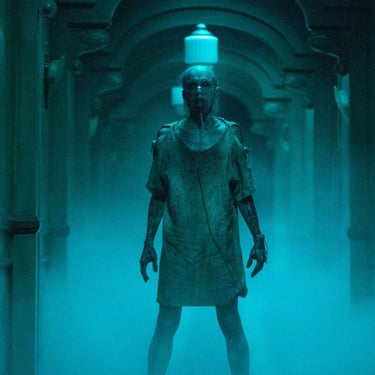
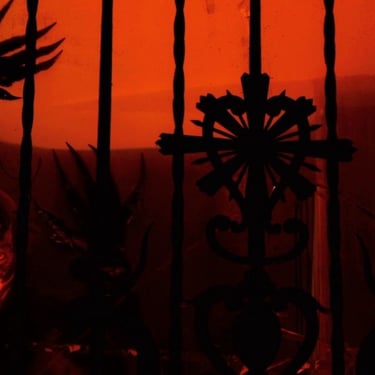
The visual contrast between the ordinary world and The Further is one of the franchise's most effective artistic ideas. The Further is filled with darkness, fog, strange architecture and unsettling colors. It feels less like a traditional afterlife and more like a nightmare that has acquired physical form.
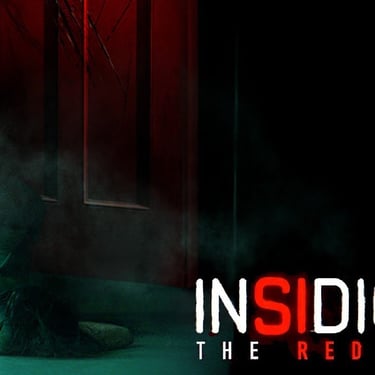
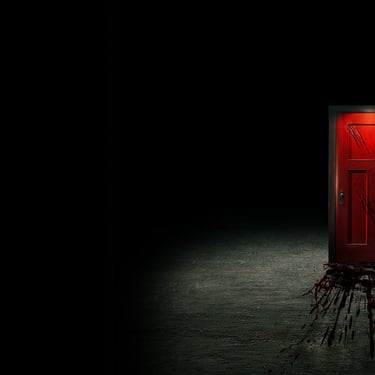
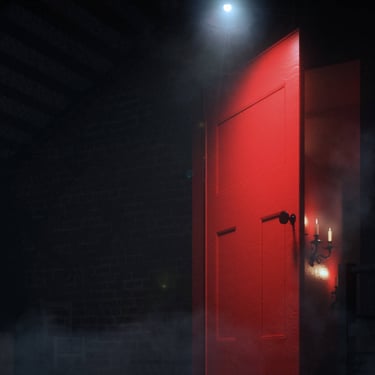
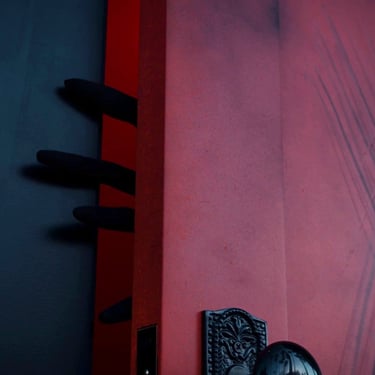
The red door became the perfect visual symbol for that world.
It is simple enough to understand immediately but mysterious enough to make the viewer wonder what is behind it.
The Importance of Color
Color is one of the most recognizable elements of Insidious.
The films frequently use muted environments before introducing stronger colors at moments of supernatural danger.
Red is particularly important.
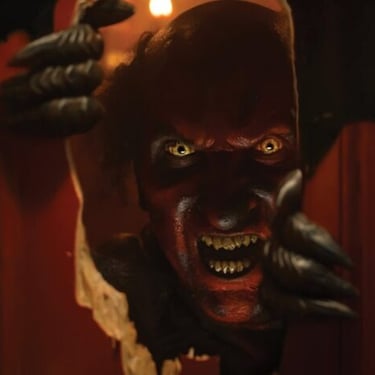
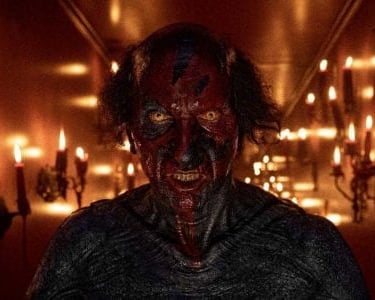
The red-faced demon is an obvious example, but the color repeatedly becomes associated with danger, The Further and the supernatural world. The effect is almost subconscious. When the image suddenly becomes dominated by red, the audience has already learned that something is wrong.
That visual language continues throughout the franchise.
The filmmakers don't need to explain every time why a particular room is dark or why a certain color suddenly dominates the screen.
The audience has learned the rules.
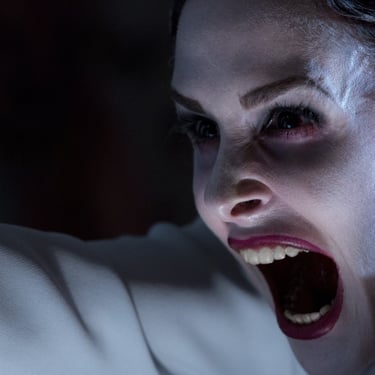
The Lipstick-Face Demon
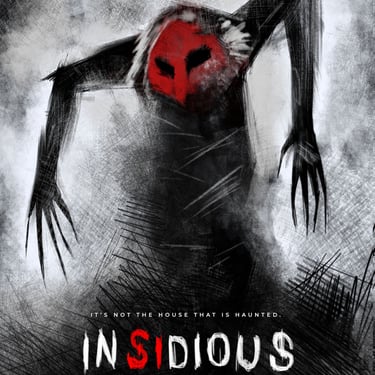
Few modern horror creatures have become as recognizable as the Lipstick-Face Demon.
The character's design is remarkably simple: a pale, almost human face, enormous dark eyes, red lips and an otherwise demonic appearance.
The simplicity is part of the genius.
There is nothing excessively complicated about the design. The creature looks like something that could have appeared in a nightmare long before it appeared on a movie screen.
The character also demonstrates the franchise's understanding of silhouette.
A good horror creature doesn't always need to be completely visible.
Sometimes a face emerging from darkness is more frightening than a detailed creature shown in full daylight.
The Lipstick-Face Demon became so closely associated with the franchise that the creature effectively became one of its visual trademarks.
Insidious: Chapter 2 and the Expansion of The Further
When James Wan returned for Insidious: Chapter 2 in 2013, the filmmakers had an opportunity to simply repeat the formula.
Instead, they expanded it.
The second film is particularly interesting because it begins playing with perspective and time. Scenes from the first movie are revisited from different viewpoints, allowing the audience to see events they thought they understood in an entirely different way.
That is an artistic decision as much as a storytelling device.
Patrick Wilson's Josh Lambert can be seen from inside The Further while events from the first film are reconsidered. This creates the impression that the two worlds are overlapping rather than existing independently.
The technique would eventually influence later entries in the franchise.
Patrick Wilson specifically drew on those earlier visual moments when directing Insidious: The Red Door, looking through the previous films for shots and angles that could be revisited from another perspective.
In that sense, the franchise began developing a visual memory.
The movies don't simply remember their characters.
They remember their camera angles.
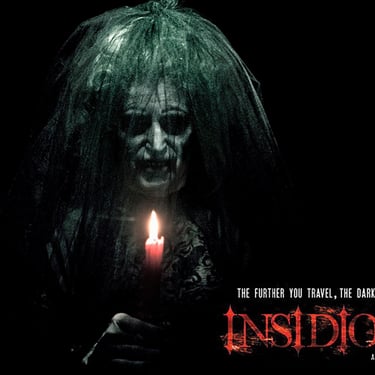
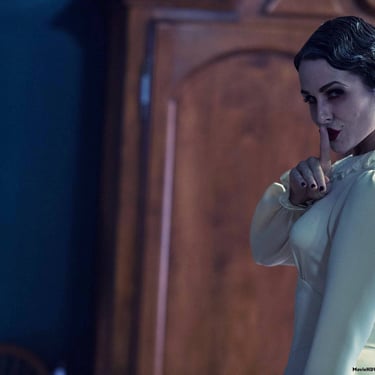
The Bride in Black
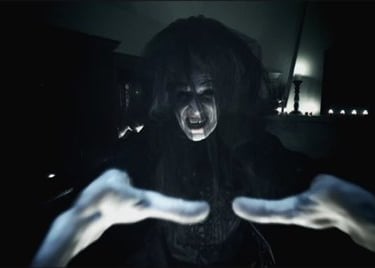
The Bride in Black is another example of how Insidious uses visual imagery to create horror.
The character's appearance is immediately unsettling: an old-fashioned black dress, veil and pale face.
But the eventual revelation that the Bride is connected to Parker Crane gives the image another dimension.
The costume becomes part of the character's identity.
Rather than simply being a monster, the Bride represents memory, trauma and identity.
This is an important recurring idea throughout the franchise: the monsters are often connected to the psychological history of the people they haunt.
The horror is therefore both supernatural and personal.
Insidious: Chapter 3
With Insidious: Chapter 3, Leigh Whannell stepped into the director's chair.
This was an important transition for the franchise.
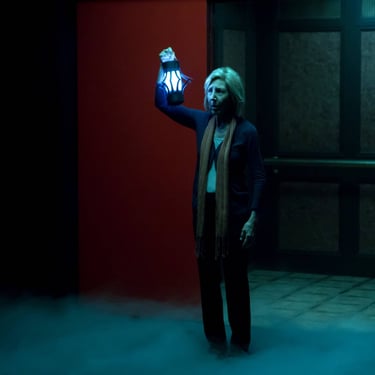
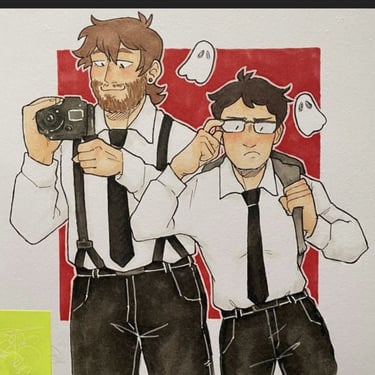
Whannell had been central to the series from the beginning as its writer and as Specs, one half of the paranormal investigation team. His film moved backward chronologically, exploring Elise Rainier's life before the Lambert story.
Artistically, Chapter 3 demonstrates that The Further could remain frightening without simply repeating the original movie.
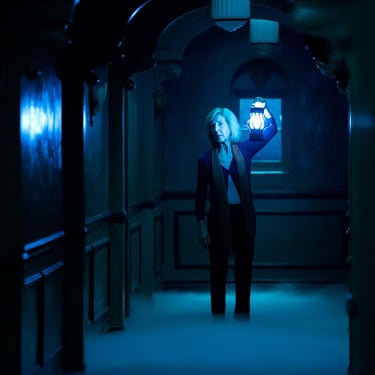
The film introduces new supernatural imagery and a new central threat while allowing Lin Shaye's Elise to become the emotional center of the story.
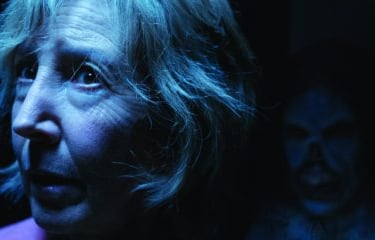
The camera also becomes an important storytelling tool. Empty spaces, darkness and unusual perspectives create the sensation that something is present even when nothing can be seen.
That technique is one of the franchise's greatest strengths.
The Last Key
Adam Robitel's Insidious: The Last Key expanded the mythology even further by turning the story toward Elise's childhood.
The visual approach became more elaborate, with larger supernatural environments and a greater emphasis on the architecture of The Further.
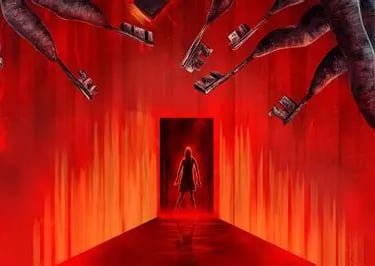
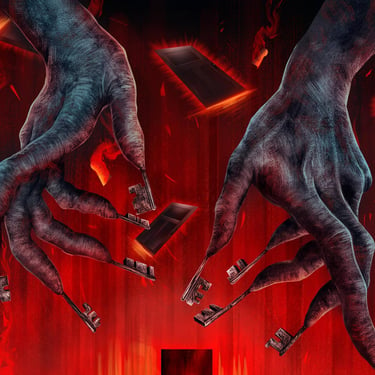
KeyFace is particularly interesting from an artistic standpoint.
The character's design incorporates keys, locks and prison imagery. The monster isn't simply frightening because of its appearance. Its design communicates an idea: confinement.
That is one of the best examples in the franchise of character design functioning as visual storytelling.
Elise's childhood home also becomes important because the physical location is tied directly to her memories.
Again, Insidious transforms an ordinary structure into a psychological landscape.
The Red Door
Released in 2023, Insidious: The Red Door represented another major artistic transition.
Patrick Wilson made his directorial debut with the film while returning as Josh Lambert. The movie reunited much of the original cast and deliberately attempted to close the Lambert family's story.
Cinematographer Autumn Eakin maintained many of the visual traditions established by the earlier films: darkness, negative space, muted colors and atmospheric lighting.
But the film also introduced a more mature emotional perspective.
Dalton is now a young adult rather than a child.
Josh is dealing with the consequences of his experiences.
The horror is therefore connected to memory and repression.
The movie's visual concept reflects that idea. The Further isn't simply somewhere the characters travel anymore.
It has become something they carry with them.
Wilson also deliberately revisited the visual language of the earlier movies. Production notes reveal that he studied scenes from Insidious: Chapter 2, including footage and alternate angles, to create visual callbacks for his own film.
That gives The Red Door an unusual quality: it feels like a movie looking backward at its own filmmaking history.
The Music of Fear
No discussion of the artistic identity of Insidious would be complete without composer Joseph Bishara.
The music is absolutely central to the franchise.
Instead of relying exclusively on traditional orchestral horror music, the score often uses harsh textures, dissonance and sudden bursts of sound.
Silence is equally important.
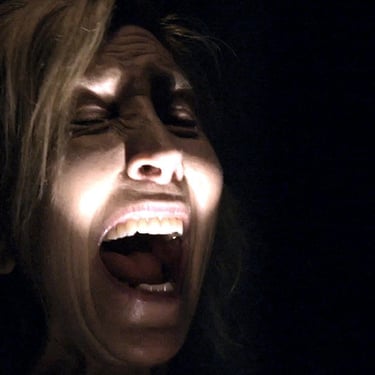
The movies frequently allow a scene to become quiet before unleashing a startling musical or visual interruption.
The result is a style of horror based on anticipation.
The audience is constantly waiting for something to happen.
And sometimes nothing happens at all.
That uncertainty becomes frightening by itself.
Practical Horror and the Power of the Set
The franchise has also consistently benefited from physical environments.
Rather than treating The Further as something that exists entirely through digital effects, the filmmakers have frequently created physical sets and practical environments that actors and cameras can interact with.
That approach continues in Insidious: Out of the Further, where production designer Nick Bassett discussed the use of large practical sets and in-camera techniques to expand the visual world of The Further.
One particularly ambitious sequence involves a massive pillow-fort environment constructed from hundreds of meters of fabric.
That kind of physical filmmaking is important because actors aren't simply imagining their surroundings.
They are moving through them.
The camera can move through them.
Light can interact with them.
And the audience can feel their physical presence.
The Continuing Artistic Legacy
The Insidious franchise has gone through several directors, cinematographers and visual approaches, but its fundamental artistic identity has remained remarkably consistent.
James Wan established the language.
Leigh Whannell expanded the mythology.
Adam Robitel deepened Elise's history.
Patrick Wilson brought the Lambert story toward closure.
And the newer films continue experimenting with the concept of The Further.
The result is more than a collection of supernatural horror movies.
It is a visual universe.
The red door.
The black veil.
The red-faced demon.
The fog.
The dark hallways.
The distorted rooms.
The empty spaces.
The sudden appearances.
The unsettling music.
All of these elements have become part of the Insidious visual vocabulary.
Perhaps that is the greatest artistic achievement of the franchise.
The films have taught audiences what to fear before the monster even appears.
A hallway can be frightening.
A doorway can be frightening.
A child's bedroom can be frightening.
And sometimes, the most frightening image in an Insidious movie is simply an empty room where something might be standing.
That is the art of Insidious: not showing audiences everything, but showing them just enough to make their imagination finish the job.