
The Dark Residents of The Further: Demons, Spirits and the Biggest Insidious Fan Theories
Since the first Insidious arrived in 2010, audiences have been fascinated by one question almost as much as the movies themselves: What exactly is The Further?
The answer given by the films is deliberately incomplete. It is a strange dimension existing somewhere between the world of the living and whatever comes after death. Astral projectors such as Josh and Dalton Lambert can enter it, while dead souls can become trapped there. Some spirits appear frightened or confused. Others are violently hostile. And then there are creatures that don't seem to have ever been human at all.
That is where things get especially interesting.
The franchise has introduced memorable entities including the Lipstick-Face Demon, the Bride in Black, KeyFace, the Man Who Can't Breathe, the Long-Haired Fiend and the disturbing Doll Family. But despite their appearances throughout the series, the movies have never completely explained the origins, hierarchy or ultimate purpose of The Further.
That has left plenty of room for fans to develop their own theories.
And some of those theories are surprisingly convincing.


First, Are They Actually Demons?
This is where Insidious gets a little complicated.
Fans frequently refer to virtually every frightening creature in The Further as a demon, but the movies establish that not every entity there is necessarily a demon.
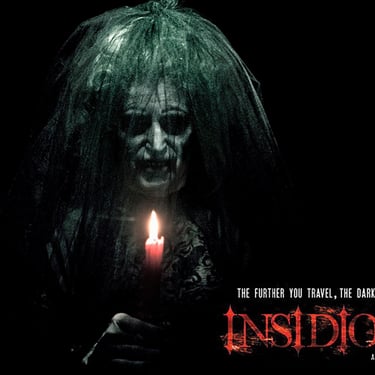
The Bride in Black, for example, is revealed to be Parker Crane, a human serial killer whose spirit remained in The Further. Michelle Crane, Parker's abusive mother, is also a human spirit.
The Lipstick-Face Demon is different.
He is presented as a genuinely demonic, non-human entity. The franchise has never given him a traditional human identity or explained that he was once a person. Other creatures fall somewhere in between, and their origins remain deliberately mysterious.
That distinction is important because it suggests that The Further isn't simply a dimension populated by demons. It is more like a supernatural realm containing different types of beings.
And that leads to the first major fan theory.
Theory #1: The Lipstick-Face Demon Is the Ruler of The Further
This is probably the most widely accepted theory among fans—and there is actually quite a bit of evidence supporting it.
The Lipstick-Face Demon, sometimes called the Red-Faced Demon, is the first truly supernatural monster the audience encounters in the franchise. He is obsessed with Dalton and wants to keep the boy trapped in The Further so that he can eventually use Dalton's physical body.
His lair is filled with marionettes, which makes the symbolism pretty obvious: the demon wants control.
Dalton isn't merely another victim. He is potentially a vessel.
The demon's position becomes even more interesting when we look at the other inhabitants of The Further. Some appear almost like ordinary ghosts. Others behave like predators. But the Lipstick-Face Demon repeatedly feels different—more powerful, more deliberate and more intelligent.
Universal's own behind-the-scenes material for Insidious: The Further describes him as seemingly "primary amongst demons and spirits in The Further," with the attraction emphasizing the idea that he could be viewed as the realm's puppet master.
That doesn't necessarily mean he literally rules every spirit.
But it certainly supports the interpretation.
The fan version of the theory
Some fans believe The Further has a hierarchy, with ordinary human spirits occupying the lower levels while powerful entities such as KeyFace and the Lipstick-Face Demon occupy higher positions.
Under that interpretation, the Lipstick-Face Demon isn't simply one demon among many.
He is something closer to a king.
The fact that his lair resembles a theater—with puppets, costumes and the eerie playing of "Tiptoe Through the Tulips"—could even represent his relationship with the rest of The Further.
Everyone is a puppet.
And he's holding the strings.
Theory #2: The Lipstick-Face Demon Isn't Interested in Dalton—He's Interested in Elise
Here's one of the stranger theories, and it comes directly from fan discussion.
A lengthy Insidious fan theory posted on Reddit argues that the Lipstick-Face Demon may never have intended Dalton to be his ultimate target.
Instead, Dalton may have been part of a larger plan involving Elise Rainier.
The theory points out that the demon appears near the end of Insidious: Chapter 3, after Elise has returned to helping people. The fan interpretation is that the demon may have recognized Elise as a serious threat to the inhabitants of The Further.
According to this interpretation, the demon's larger objective could have been eliminating Elise.
Dalton was simply the bait.
There's no confirmation that this is what the filmmakers intended, but it creates an interesting way of connecting the prequels to the original movie.
Elise isn't simply some psychic who happens to encounter demons.
She's their enemy.
And if the most powerful entities in The Further know who Elise is, it would explain why her presence repeatedly seems to coincide with increasingly dangerous supernatural activity.
Theory #3: The Bride in Black and the Lipstick-Face Demon Were Working Together
This one is particularly interesting because Insidious: Chapter 2 reveals that the Bride in Black isn't actually a supernatural female demon.
She's Parker Crane.
Parker was a human being who became a serial killer under the horrific psychological influence of his mother, Michelle Crane. After dying, Parker remained in The Further and attempted to take possession of Josh Lambert's body.
But here's where fans have noticed something fascinating.
Both Parker and the Lipstick-Face Demon want access to the physical world.
Both target people with the ability to astrally project.
And both are interested in taking over human bodies.
So some fans have theorized that the two entities may have had an understanding—or even an alliance.
The theory goes something like this:
Parker wanted Josh.
The Lipstick-Face Demon wanted Dalton.
If both could manipulate the Lambert family at the same time, they could potentially gain two powerful bodies belonging to people capable of traveling between worlds.
That would be an incredibly useful arrangement.
There is no explicit scene in which Parker and the Lipstick-Face Demon sit down and make a supernatural business deal, of course.
But the idea fits a recurring theme in Insidious: the spirits of The Further are opportunistic.
They see astral projectors as doors into the living world.
Theory #4: The Further Is Actually a Purgatory
This one is considerably more supported by the movies.
The Further has repeatedly been described as a realm between the living world and what lies beyond. It isn't simply Hell, and it isn't exactly Heaven.
Elise herself is able to pass through The Further on her way toward a better afterlife and later return to help Josh and the others.
That suggests something important:
The Further isn't necessarily where everyone is supposed to remain.
Instead, it may be a crossroads.
Some spirits pass through.
Some become trapped.
And some deliberately stay.
A fan discussion on Reddit reached essentially this conclusion: everyone passes through The Further, but malevolent spirits may choose to remain because they can exploit people who accidentally enter it.
This would explain why the realm contains such dramatically different entities.
The Doll Family isn't necessarily the same kind of being as the Lipstick-Face Demon.
The Bride in Black wasn't born there.
The spirits of human beings appear to enter The Further because of death, trauma or unfinished business.
The demons may have entirely different origins.
And that brings us to an even bigger possibility.
Theory #5: The Demons Were Never Human
One of the biggest unanswered questions in the franchise is where the actual demons came from.
We know Parker Crane was human.
We know Michelle Crane was human.
We know the Man Who Can't Breathe appears to have a human history.
But what about the Lipstick-Face Demon?
Who was he before he became that creature?
The movies never give us an answer.
And perhaps that's intentional.
The franchise appears to make a distinction between human spirits corrupted by their experiences and entities that are fundamentally something else.
The Lipstick-Face Demon has horns, hooves, a tail, elongated claws and an inhuman appearance. His behavior is also different from the human ghosts.
This has led fans to theorize that creatures such as him may be native to The Further.
In other words:
Humans don't become demons. Demons already live there.
Under this theory, The Further isn't just an afterlife.
It's an ecosystem.
The dead arrive there.
The demons live there.
And the astral projectors accidentally wander into their territory.
Theory #6: KeyFace Is a Prison Warden
KeyFace, introduced in Insidious: The Last Key, is another creature that immediately created questions about the structure of The Further.
His design practically screams symbolism.
Keys.
Locks.
Doors.
Prisons.
And that's probably intentional.
Director Adam Robitel explained that the character wasn't in an earlier version of the screenplay and that he wanted a creature associated with prisons, locks and keys.
That makes the popular fan interpretation particularly compelling:
KeyFace may function as a jailer within The Further.
Rather than being the ruler, perhaps he's the warden.
His ability to lock away voices and manipulate people makes him particularly suited to that role.
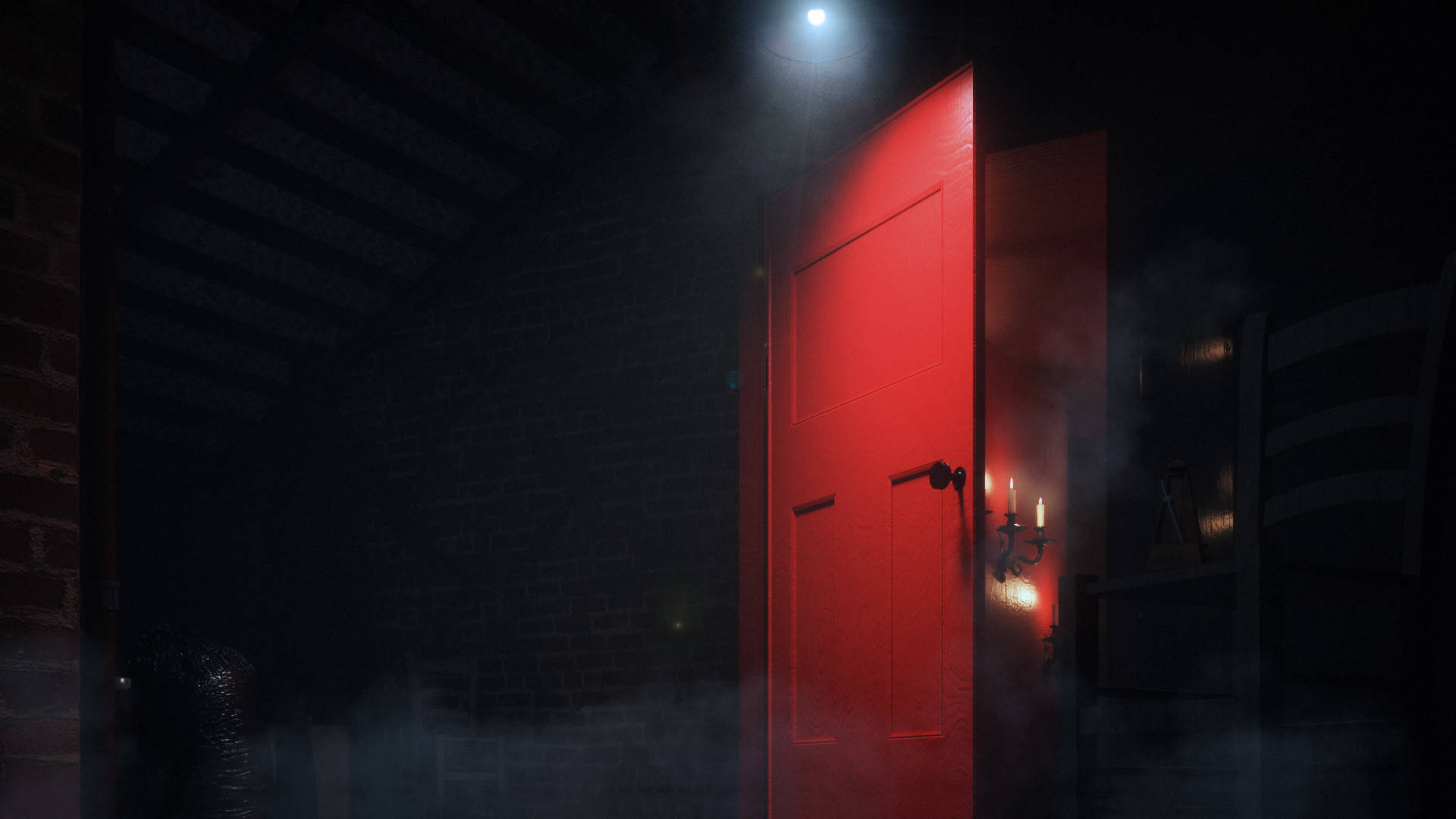
Some fan analysis has gone even further, suggesting that different red doors may correspond to individual entities and that the environments beyond those doors reflect their connections to the living world. Parker's territory, for example, resembles the house associated with his childhood.
If that's true, the red doors may not merely be entrances.
They could be cells.
Theory #7: Every Major Entity Has Its Own "Domain"
This may be one of the most useful ways to understand The Further.
Look at the environments associated with its major inhabitants.
The Lipstick-Face Demon has his strange theatrical lair.
Parker Crane has a connection to his childhood home and his mother.
The Man Who Can't Breathe is associated with the apartment building.
KeyFace is associated with a prison-like environment.
These aren't random haunted locations.
They seem connected to the identities and traumas of the entities inhabiting them.
So perhaps The Further is not one giant landscape.
Perhaps it's a collection of personal supernatural territories, all existing within the same dimension.
Think of it as an enormous haunted city where every monster has its own neighborhood.
That would also explain why characters can move from one bizarre environment to another.
Theory #8: The Man Who Can't Breathe Represents More Than a Ghost
The Man Who Can't Breathe—sometimes called the Wheezing Demon—is one of the creepiest creations in the franchise.
Unlike the Lipstick-Face Demon, he looks much more human.
He wears an oxygen mask and moves in a disturbingly unnatural manner.
But fans have noticed that his very design suggests something beyond a conventional ghost.
He represents illness.
Suffering.
Fear.
And helplessness.
Some franchise commentary has interpreted the character as a physical manifestation of cancer and misery, which makes his appearance more symbolic than many viewers initially realize.
That raises an intriguing possibility:
Perhaps some entities in The Further are manifestations of human suffering rather than simply dead people.
If so, the Further could be populated by beings created from the strongest emotions humans carry into death.
Fear creates monsters.
Hatred creates monsters.
Trauma creates monsters.
And perhaps the most powerful entities aren't necessarily the oldest—they're the ones created from the strongest human suffering.
Theory #9: The Further Has No True "Good Guys" or "Bad Guys"
This is another interpretation that makes the mythology more interesting.
Elise enters The Further.
So do Josh and Dalton.
But they aren't evil.
Therefore, simply being in The Further doesn't make someone evil.
The realm is morally complicated.
There are lost souls.
There are victims.
There are predators.
There are entities that appear almost neutral.
And there are outright monsters.
The Doll Family, for example, is disturbing but fundamentally different from the Lipstick-Face Demon. The Further Wiki describes the family as spirits doomed to relive their violent deaths.
That means the real danger may not be The Further itself.
The danger may be what lives there.
And Then Came Insidious: Out of the Further
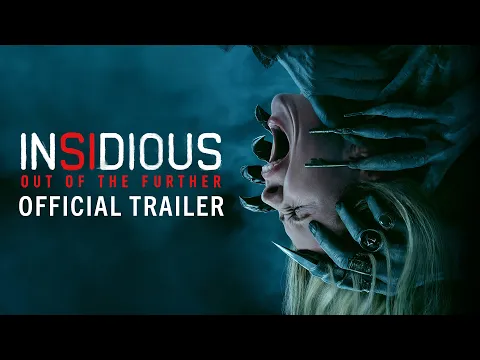
The mythology became even more interesting in 2026 with Insidious: Out of the Further.
The sixth film introduces a new family and a new central supernatural threat while significantly expanding the mythology of The Further.
Sony's official synopsis describes The Further as a "purgatorial realm of lost souls" and introduces Gemma, a mother who discovers that she can not only enter The Further but bring entities from it back into the real world.
That idea could potentially change everything.
For years, the living have been trying to escape The Further.
Now we have a character who can potentially bring its inhabitants out.
And if The Further is an ecosystem—with different territories, spirits, demons and hierarchies—that ability could be catastrophic.
Interestingly, fans discussing the new film before and around its release were already looking for returning entities, including the Man Who Can't Breathe and the creepy Doll Family.
That suggests something important about the franchise's mythology:
The Further's inhabitants may not simply disappear when defeated.
They may be much harder to destroy than the individual movies make it seem.
The Biggest Mystery of All
After six movies, the biggest mystery surrounding Insidious may still be the simplest:
What actually is The Further?
We know what it looks like.
We know how people enter it.
We know that dead souls can become trapped there.
We know that astral projectors can travel through it.
We know that some inhabitants are human spirits.
We know that at least some entities appear to be genuinely demonic.
But we still don't know who—or what—created the place.
We don't know whether it has always existed.
We don't know whether the Lipstick-Face Demon actually rules it.
And we don't know whether creatures such as KeyFace are independent monsters or part of some larger supernatural hierarchy.
That uncertainty may actually be one of the franchise's greatest strengths.
Unlike some horror universes, Insidious doesn't explain everything.
The Further remains frightening precisely because there are still doors we haven't opened.
And perhaps that's the perfect way to look at the franchise.
The red door isn't simply a portal.
It's an invitation.
Behind it could be Parker Crane.
It could be KeyFace.
It could be the Man Who Can't Breathe.
It could be a lost soul that never meant to hurt anyone.
Or it could be something we've never seen before.
And that's what makes The Further so terrifying: we don't know how deep it goes.
Note: The theories above are deliberately labeled as fan theories or interpretations. The films establish some pieces of the mythology directly, while other connections—particularly theories about a hierarchy, alliances between entities, or the Lipstick-Face Demon targeting Elise—remain speculation.